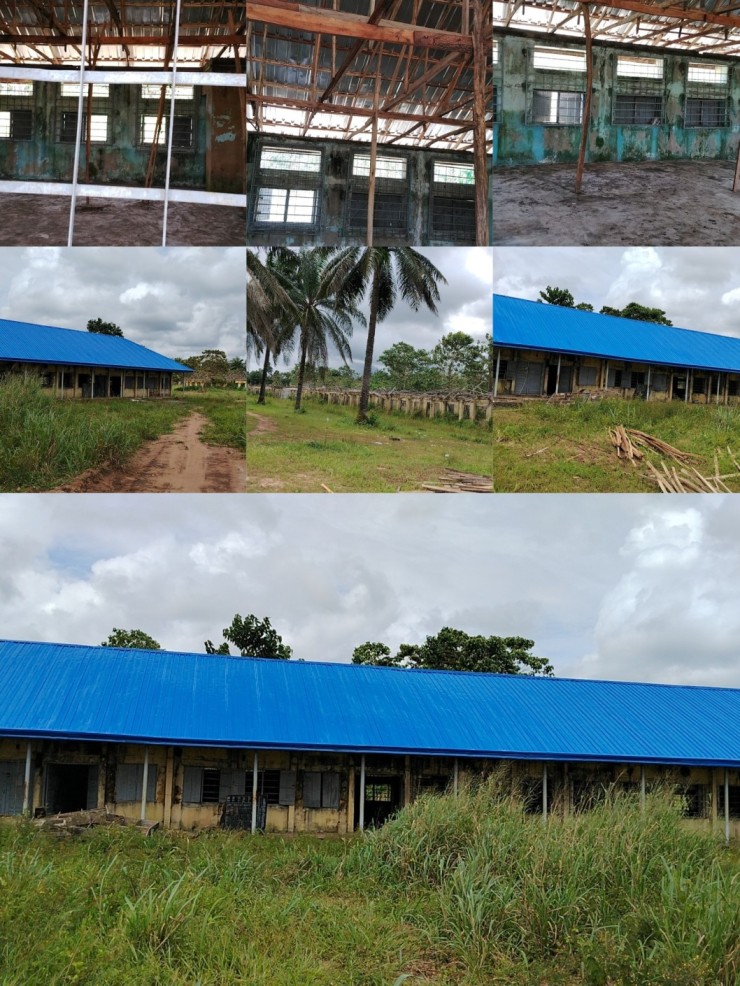

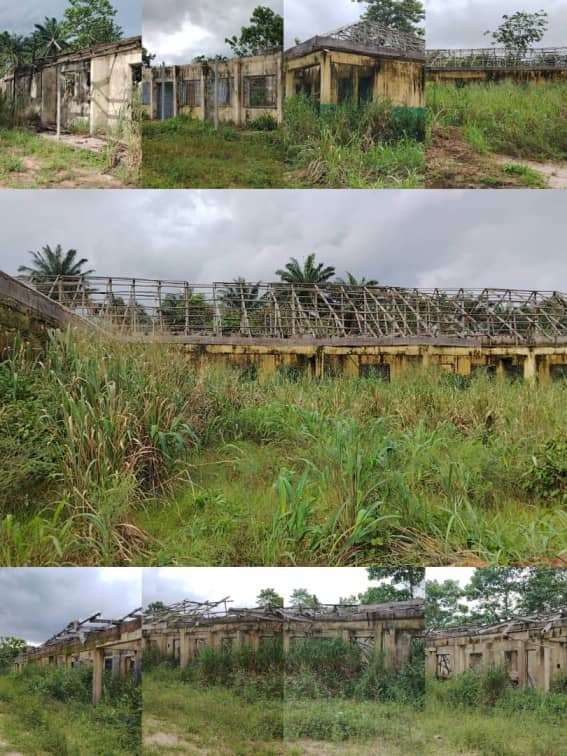
A DAY IN A NIGHTMARE: A Visit to Agwa Secondary School Is a Sordid Indictment of Educational Neglect
"The deteriorating state of Agwa Secondary School is no longer a peripheral concern; it is a governance emergency".
ISSN: 2354-4481
By John Mbonu Uchenwoke-Ekperechi
Publisher/Editor-in-Chief, Inside Agwa News
Columnist, Shadow of the Flag
Writes from Owerri, Imo State
There are moments when a visit to a public institution becomes more than an ordinary journey. It becomes an encounter with the conscience of government.
A visit to Agwa Secondary School, Agwa (ASSA) is one such encounter.
What confronts a visitor is not merely a school in need of renovation. It is a disturbing portrait of educational neglect, institutional decay, policy inertia and a widening implementation gap between government's obligations and the lived reality of citizens.
For a people whose sons and daughters have contributed enormously to the economic and social development of Imo State and Nigeria, the condition of Agwa Secondary School is profoundly troubling.
Agwa is not an obscure community. It is an important oil-producing clan in Oguta Local Government Area, part of an oil-producing region whose natural resources contribute to the economic architecture of Imo State and Nigeria. The clan is associated with numerous oil wells and sits within the wider oil-producing belt of the state.
Agwa is also widely regarded locally as a major food-producing community and an important agricultural contributor to Imo's food economy. Politically, it represents a significant voting bloc in Oguta LGA, the Ohaji-Egbema/Oguta/Oru-West Federal Constituency and Imo West.
The clan comprises six autonomous communities and three INEC wards, while sharing boundaries with Mbaitoli, Owerri West and Ohaji/Egbema Local Government Areas. Agwa also occupies a strategically important position within the wider oil-producing and agricultural corridor of southern Imo, adjoining the AdaPalm axis and contributing to the productive economy of a state whose natural and agricultural resources have long sustained public revenue and livelihoods.
Yet, beneath these demographic, political, agricultural and economic realities is a disturbing contradiction: the only public secondary school serving the Agwa clan has been allowed to deteriorate to a condition that should embarrass every level of government with responsibility for education and public infrastructure.
This is not simply an Agwa problem.
It is a test of governance.
A School Born Out of Vision
Agwa Secondary School was established during the 1978/1979 academic session, at a time when the community recognised that education was indispensable to its future.
Before then, Agwa children seeking secondary education had to travel to neighbouring communities and towns, attending institutions such as Oguta Girls, Trinity High School, Priscilia Memorial Grammar School, Holy Ghost College Owerri, Owerri Girls, Presentation Ogbaku, Government Technical College Orlu, Akwakuma Girls and other schools outside Imo State.
The establishment of ASSA therefore represented more than the construction of classrooms. It represented a declaration that Agwa children deserved access to education within their own community.
That vision has now been severely compromised.
The school has reportedly remained in a dilapidated state since around 2016, while years of insecurity subsequently compounded the crisis.
Following the inauguration of the Agwa Central Union (ACU) under its then National President-General, Benson Akunya, Esq., the community mobilised its own resources to intervene. Through contributions and donations from Agwa sons and daughters, parts of the administrative infrastructure received attention, while efforts were also made to equip the science laboratory.
This should never have been the permanent responsibility of a community whose taxes, natural resources and civic contributions feed into the broader public system.
But the community tried.
Then insecurity struck.
Between 2022 and mid-2024, insecurity reportedly resulted in extensive vandalism of the school's facilities. Buildings and educational infrastructure were stripped of essential materials, leaving the institution in an even more precarious condition.
And since then?
Appeals have been made.
Representations have been made.
Stakeholders have been approached.
Government agencies have been contacted.
Yet the school continues to wait.
How Long Must Agwa Ask?
The current ACU President-General, Mr. Nduka Ozor, has continued to engage government and relevant institutions on the condition of the school.
Appeals have reportedly reached the Imo State Government, the Imo State Oil Producing Areas Development Commission (ISOPADEC), the Niger Delta Development Commission (NDDC), elected representatives at the senatorial, federal constituency and state constituency levels, as well as the local government administration.
There has, however, been no comprehensive reconstruction of the school commensurate with the scale of the damage. One encouraging development is the intervention of Hon. Engr. Eugene Okechukwu Dibiagwu, member representing Ohaji-Egbema/Oguta/Oru-West Federal Constituency, who, following engagements with the Agwa Central Union, agreed to facilitate the renovation of one of the classroom blocks.
That intervention is commendable.
But one classroom block cannot answer a crisis affecting an entire school.
It is precisely here that government must sit up.
The time for rhetoric is over. The government must match words with action.
The Niger Delta Paradox
The condition of Agwa Secondary School also reflects a broader paradox confronting many communities in the Niger Delta.
For decades, oil-producing communities have lived with the contradictions of resource extraction: economic value beneath the soil, but inadequate social infrastructure above it.
Oil leaves the communities.
Development does not always return with the same urgency.
This contradiction is particularly painful in education.
A child in an oil-producing community should not have to study in an environment where vandalised buildings, inadequate classrooms, deficient laboratory facilities and deteriorating infrastructure become normalised.
Natural-resource-producing communities should not have to cry blood before basic educational infrastructure receives governmental attention.
The Niger Delta question is therefore not merely about oil revenues. It is also about social investment, human capital development, educational equity and the right of children to inherit something more valuable than depleted resources.
Oil may finance today's economy, but education builds tomorrow's economy.
No society can build a competitive knowledge economy on the ruins of its public education system.
Agwa Should Not Have to Beg for What Is Its Right
The greatest concern is not simply that Agwa Secondary School is dilapidated.
It is that the situation has persisted despite repeated appeals.
That points to a troubling implementation gap.
Government may have policies on education. Budgets may contain provisions for infrastructure. Agencies may have mandates to intervene in oil-producing communities. Representatives may make promises during political seasons.
But policy without implementation is merely paperwork.
A government that cannot translate educational policy into functional classrooms, laboratories, libraries, sanitation facilities and safe learning environments has not adequately addressed the problem.
This is where institutional responsibility and political will must converge.
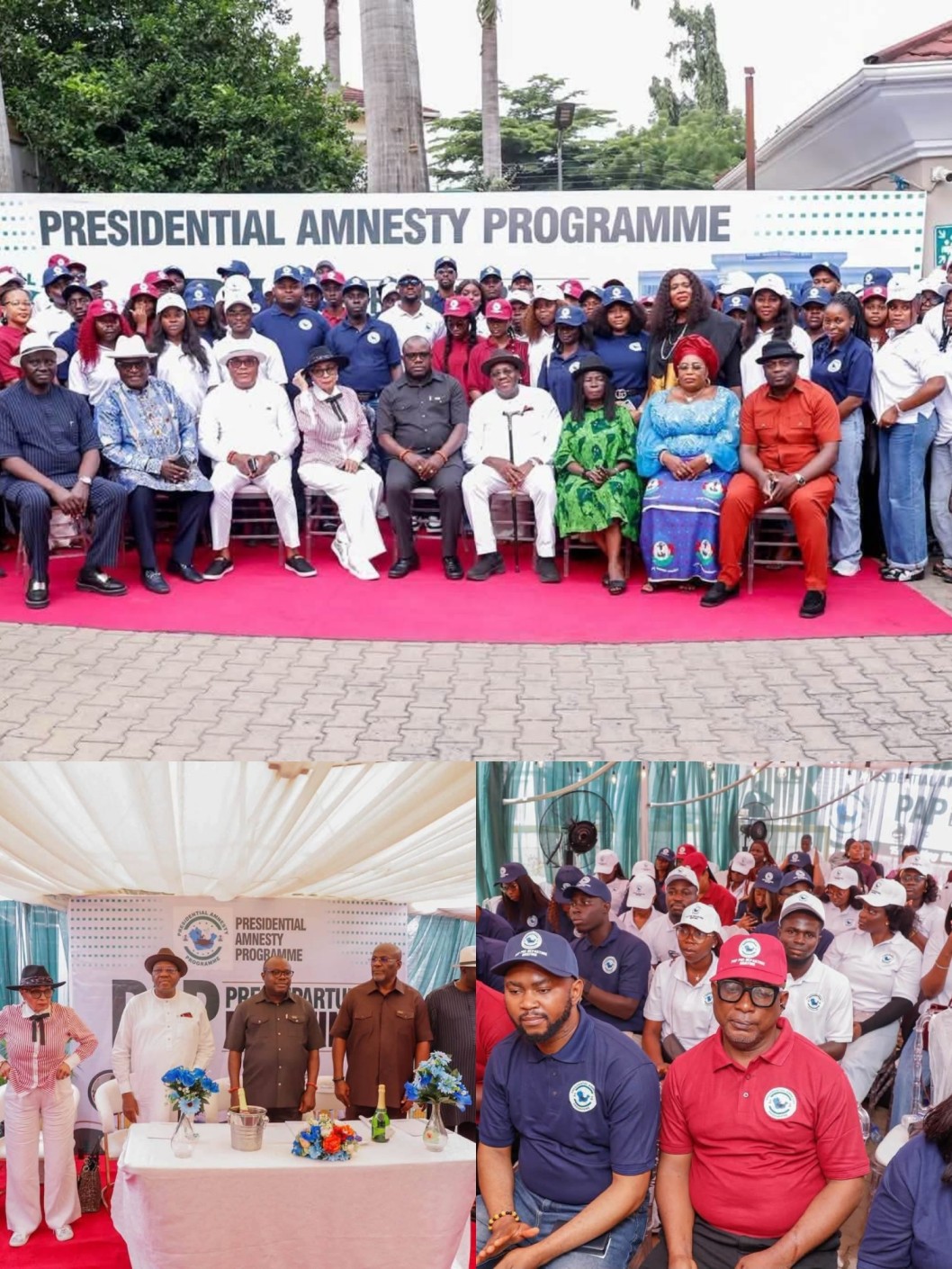
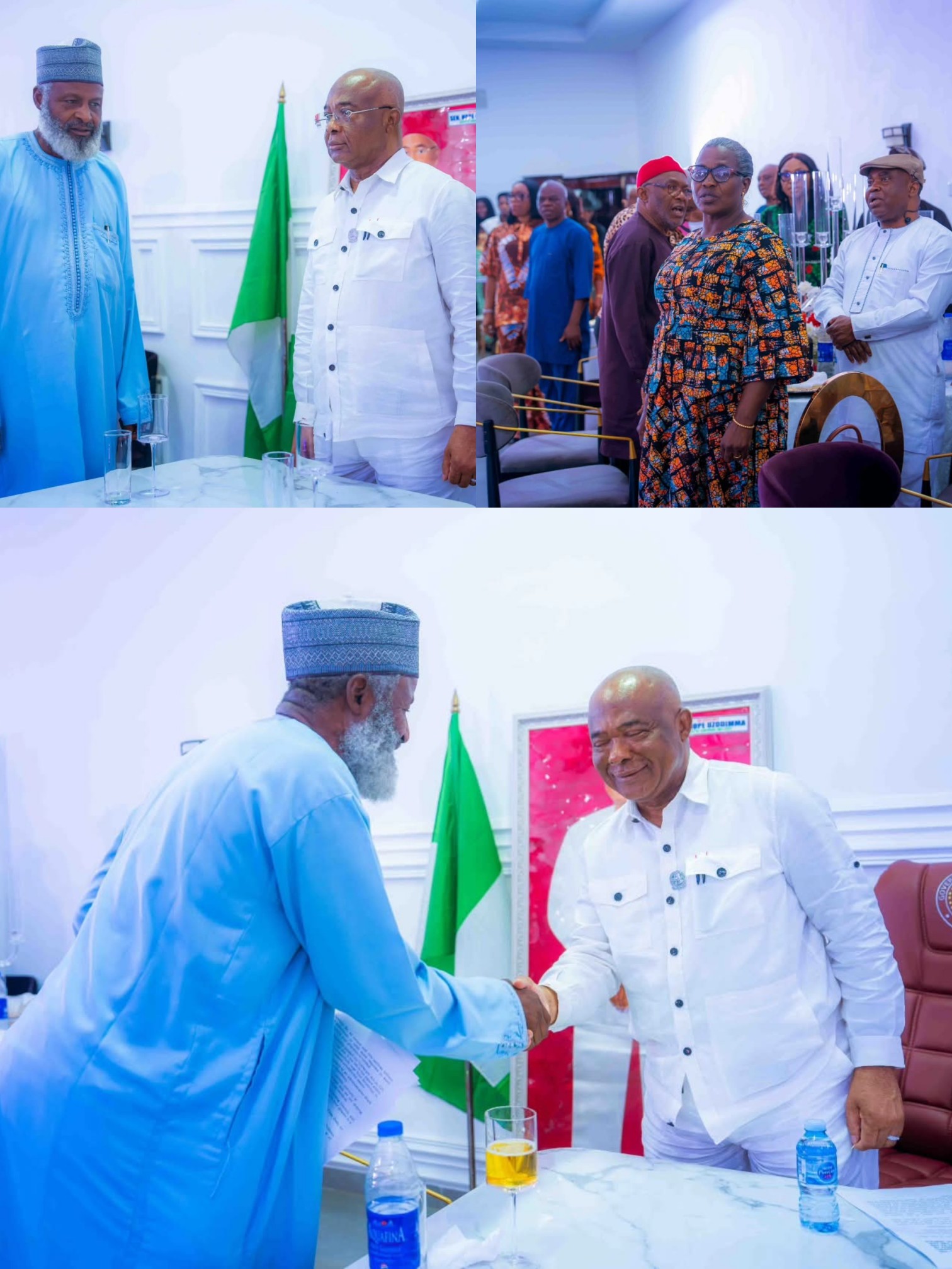
The Imo State Government, under Governor Hope Uzodimma, has undertaken visible infrastructure projects across the state, and that record should be acknowledged. But development cannot be considered comprehensive when communities such as Agwa still await the reconstruction of a basic educational institution that has served generations.
The Governor has an opportunity to ensure that the benefits of infrastructure development are felt more equitably across the state, including in communities that contribute significantly to the state's economic base.
Agwa should be part of that story.
This Is About Children, Not Politics
This editorial is not a partisan attack.
It is a civic appeal.
It is an appeal to the Imo State Government, NDDC, ISOPADEC, Oguta Local Government Council and all elected representatives connected to Agwa.
Fix Agwa Secondary School.
Not tomorrow.
Not during another campaign.
Not after another generation of children has been forced to travel elsewhere in search of basic education.
The government must commission a comprehensive assessment of the school, develop a reconstruction plan, mobilise the appropriate agencies and establish a transparent timeline for completion.
The intervention should cover classrooms, laboratories, administrative facilities, sanitation, water, electricity, security, furniture and other essential components required for a functional modern secondary school.
This should not be cosmetic renovation.
It should be transformative reconstruction.
Let Agwa Secondary School Become a Macedonia
There is an old expression about finding one's Macedonia—a place where help is urgently needed and where intervention can produce transformative consequences.
Agwa Secondary School should be Imo State's Macedonia.
Governor Hope Uzodimma and the relevant development agencies have an opportunity to turn a story of educational neglect into a story of governmental responsiveness.
Agwa has contributed to the state.
Agwa has contributed to the national economy.
Agwa has endured insecurity.
Agwa has mobilised its own people to preserve what it could.
Now government must do its part.
A child denied basic education is not merely deprived of a classroom. That child is denied opportunity, dignity, skills and a pathway into the future.
When educational deprivation becomes systemic, its consequences can become intergenerational.
An education system cannot be allowed to become a casualty of administrative indifference.
The deteriorating state of Agwa Secondary School is therefore no longer a peripheral concern. It is a governance emergency.
The question is no longer whether intervention is necessary.
The question is: why has meaningful intervention taken so long?
To the Imo State Government, NDDC, ISOPADEC, Oguta Local Government and all representatives of Agwa:
Government cannot afford to look away.
Concrete action must replace promises.
Political will must replace policy inertia.
Reconstruction must replace decay.
And above all, the children of Agwa must return to a school worthy of their dreams and their community's contribution to Nigeria.
Let Agwa Secondary School return to the ways of learning.
Let the classrooms reopen.
Let the laboratories function.
Let the teachers teach.
Let the children learn.
And let government demonstrate that no community is too remote, too politically inconvenient or too economically exploited to deserve the dignity of a functional public school.
Agwa has waited long enough.