

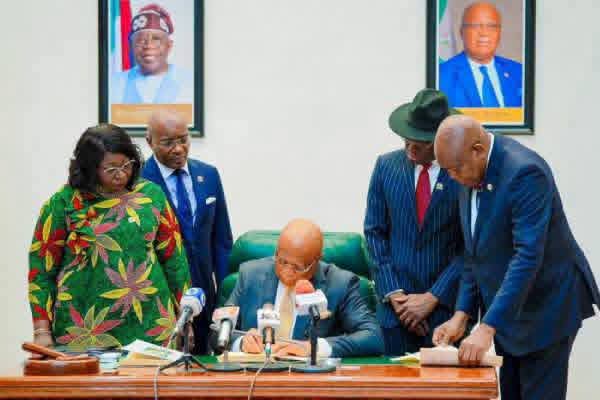
Akwa Ibom Assets Management Agency: Umo Eno Moves to Safeguard Public Investments
E-ISSN: 2354-4481
By Nnanna Wisdom
UYO, AKWA IBOM — The Akwa Ibom State Government has established the Akwa Ibom State Assets Management Agency as part of efforts to strengthen the preservation, maintenance and effective management of government-owned infrastructure and other public assets.
The initiative, under the administration of Governor Umo Eno, is designed to ensure that investments in infrastructure continue to deliver value beyond the completion of construction projects.
The agency is expected to provide an institutional framework for coordinating the maintenance and management of public assets across the state. Its responsibilities cover a wide range of government properties and facilities, including schools, healthcare institutions, administrative buildings, vehicles, equipment and other infrastructure owned by the state.
The development reflects the administration's emphasis on protecting public investments through structured maintenance rather than allowing facilities to deteriorate before rehabilitation becomes necessary.
A key component of the agency's mandate is the development and maintenance of a comprehensive register of government assets. Such records are expected to provide government with reliable information on the condition, location and status of public properties and equipment.
The availability of accurate asset records could also support government planning, budgeting and maintenance scheduling, while helping authorities determine priorities for repairs, replacement and future investments.
Infrastructure maintenance remains a major factor in determining the long-term value of public projects. Roads, schools, hospitals, offices and government equipment can lose their usefulness when regular maintenance is neglected, potentially forcing government to spend significantly more on rehabilitation or replacement.
The state government's approach therefore seeks to place maintenance within the normal cycle of public administration rather than treating it as an emergency measure after infrastructure has suffered significant deterioration.
The Assets Management Agency is also expected to promote greater accountability in the handling of public property. By documenting government assets and establishing systems for their management, the state can improve oversight and reduce the risk of public infrastructure being abandoned or underutilised.
For residents, effective asset management could translate into better-maintained public facilities and more reliable government services. Schools, hospitals and administrative buildings, for instance, require continuous maintenance to remain safe, functional and suitable for their intended purposes.
The initiative also complements the administration's investment in new infrastructure by focusing on the preservation of facilities already provided with public funds.
Rather than measuring development solely by the number of projects completed, the policy places emphasis on the ability of those projects to remain useful over time.
The establishment of the agency consequently represents an effort to institutionalise a maintenance culture within the state's public sector.
The state government believes that protecting existing infrastructure is as important as constructing new projects, particularly at a time when governments face competing demands for limited public resources.
Through coordinated asset management, systematic maintenance and improved record-keeping, the administration seeks to extend the lifespan of public infrastructure and maximise the benefits derived from government investments.
The policy is ultimately aimed at ensuring that public assets remain productive and accessible to citizens for years after their construction or acquisition, strengthening the long-term sustainability of development projects across Akwa Ibom State.
The Akwa Ibom State Assets Management Agency forms part of the state government's broader approach to public infrastructure management, with emphasis on preserving government-owned assets, improving maintenance planning and ensuring that public investments continue to provide value over their useful lifespan.
Meta Description:
Excerpt: