
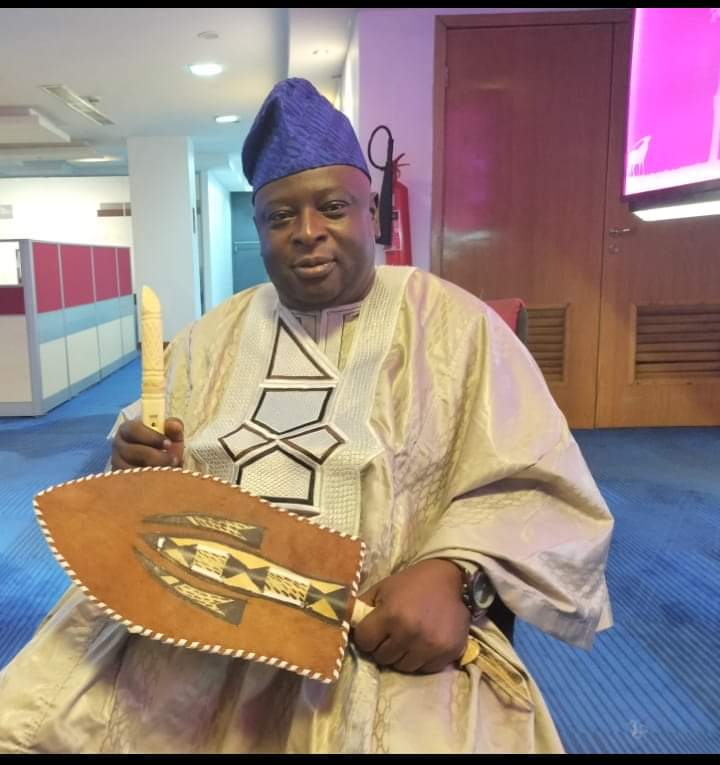
BKO: The Big Masquerade of Nigerian Journalism and the Duty to Let Journalists Do Their Job
E-ISSN: 2354-4481
By John Mbonu Uchenwoke-Ekperechi
Publisher & Editor-in-Chief, Inside Agwa News
Historian, Public Affairs Analyst and Social Commentator
Writes from Owerri, Imo State
Email: [email protected]
There are journalists who report events, journalists who analyse events, and there are journalists whose presence alone can elevate the conversation. Babajide Kolade-Otitoju, popularly known as BKO, belongs to the last category. For decades, he has built a reputation for factual, courageous, investigative and historically grounded journalism—qualities that millions of Nigerians, including myself, deeply appreciate.
I am reminded of the late Apostle Emmanuel Nwadilugwu, of the Eternal Sacred Order of Cherubim and Seraphim, Agwa Branch, who brought the celebrated Band of Seraph to Agwa Clan and the wider Oguta Province, Imo State. Whenever he appeared at Sunday service, his presence was so commanding that everything else seemed ordinary. In his own sphere, BKO has become something of that magnitude—a polar star of Nigerian journalism.
Today, I regard BKO as the Big Masquerade of Nigerian journalism—not one among the masquerades, but the masquerade. I enjoy watching him on TVC Journalist Hangout alongside other accomplished television journalists and analysts such as Seun Okinbaloye of Channels Television, Sumner Sambo of Arise News, Rufai Oseni and Reuben Abati. They have each made their marks, but BKO remains remarkably consistent in my view, still working, still researching and still refusing to sleep on his responsibility to the profession.
The controversy surrounding his analysis of the 2026 Osun State governorship election deserves particular attention. Contrary to suggestions that BKO was against Governor Ademola Jackson Nurudeen Adeleke, his approach throughout the contest was remarkably balanced. He did not make the kind of definitive prediction he sometimes makes about elections. Rather, he repeatedly maintained that the contest would be close, and it did.
The two leading contenders were Governor Ademola Adeleke of the Accord Party and Munirudeen Bola Oyebamiji of the All Progressives Congress (APC).
What impressed me most was BKO's willingness to interrogate the records of both men. I heard him acknowledge Adeleke's achievements in infrastructure and other areas of governance, while also discussing Oyebamiji's personal interventions and community-oriented projects, including reported religious and social infrastructure. That is precisely what serious journalism should do: put competing records before the public and allow citizens to make informed judgments.
So, why would anyone conclude that BKO was against Adeleke merely because his analysis did not satisfy their political expectations?
BKO is a human being. Like every Nigerian, he has the constitutional right to hold personal views and make a political choice according to his conscience. But the remarkable thing is that he did not allow any personal disposition to overwhelm his professional responsibility. He analysed the election from historical, political, social, economic and democratic perspectives.
That is journalism.
We must learn to allow journalists—especially journalists of BKO's stature—to do their jobs. Journalism is not supposed to become an extension of political party or supporters headquarters. A journalist who refuses to praise your candidate is not necessarily your enemy, just as a journalist who praises your candidate is not automatically your friend.
Those who have taken to social media to vilify BKO because his analysis did not conform to their expectations should remember that worshipping "The gods of Small Things" cannot diminish a giant, which BKO is.
BKO has spent more than three decades building a reputation in journalism—from the newspaper trenches to television broadcasting and senior editorial leadership. He has earned his place at the table.
Let the journalist investigate. Let him analyse. Let him challenge. Let him praise where praise is deserved and criticise where criticism is necessary.
And when the noise of partisan politics eventually fades, truthful, factual and courageous journalism will remain.
That, to me, is the enduring legacy of BKO.
By John Mbonu Uchenwoke-Ekperechi
Publisher & Editor-in-Chief, Inside Agwa News
Historian, Public Affairs Analyst and Social Commentator
Writes from Owerri, Imo State
Email: [email protected]