
Morka: Tinubu Has Outperformed Every Democratically Elected President in Nigeria
E-ISSN: 2354-4481
By Laz Umezuruike
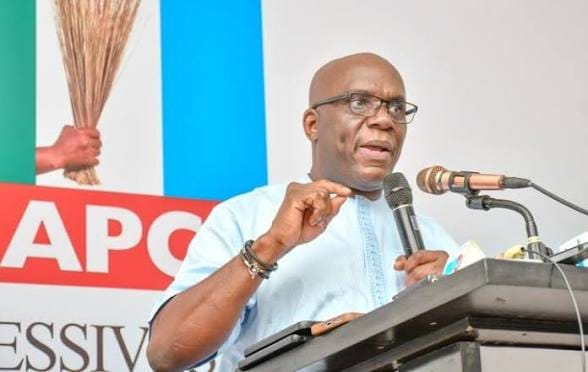
Abuja, Nigeria-The National Publicity Secretary of the All Progressives Congress (APC), Felix Morka, has claimed that President Bola Ahmed Tinubu has outperformed every democratically elected president in Nigeria, defending the administration’s economic policies and reforms.
Morka made the claim during an appearance on Channels Television on Monday, where he argued that Tinubu’s performance in his first term should be assessed against the economic conditions the administration inherited in May 2023.
According to the APC spokesman, the Tinubu administration inherited an economy that was already in serious difficulty, insisting that the government had to take difficult decisions to address longstanding structural problems.
He specifically cited the removal of petrol subsidy, unification of the foreign exchange market, increased government revenue and investments in infrastructure as some of the major measures undertaken by the administration.
Morka maintained that the reforms were necessary to reposition the Nigerian economy, despite the immediate hardship experienced by citizens.
He also blamed previous administrations for the economic challenges confronting the country, with particular criticism directed at the Peoples Democratic Party’s 16-year period in power.
The APC spokesman described the administration of former President Muhammadu Buhari as a “stopgap” government that, in his assessment, helped stabilize the country before Tinubu assumed office.
Morka’s comments come amid continuing public debate over the impact of the Tinubu administration’s economic reforms, particularly the rising cost of food, transportation, housing and other essential goods and services.
Since taking office, Tinubu has implemented major economic policy changes, including the removal of petrol subsidy and reforms to the foreign exchange system. While the government has maintained that the measures are designed to create a more sustainable economy, Nigerians have continued to raise concerns about inflation and declining purchasing power.
Defending the administration, however, Morka argued that the government deliberately chose long-term economic stability over short-term political popularity.
He said the success of the reforms should ultimately be measured by tangible improvements in the lives of Nigerians, including the creation of jobs, reduction in inflation and improved public services.
The APC spokesman’s assertion that Tinubu has performed better than every democratically elected president is likely to fuel further political debate, particularly as the country approaches another electoral cycle.
Supporters of the administration have consistently pointed to increased revenue, infrastructure projects and economic reforms as evidence of progress, while critics argue that economic growth and government policies must translate into improved living standards for ordinary Nigerians.
The debate also reflects differing interpretations of how Nigeria’s recent economic challenges should be assessed. While the APC has emphasized the conditions inherited by the Tinubu administration, opposition parties and critics have continued to question the pace and consequences of the reforms.
Morka nevertheless maintained that the Tinubu government should be judged by the outcomes of its policies over time rather than by the immediate difficulties associated with implementing them.
He argued that the administration’s approach was focused on addressing fundamental weaknesses in the economy and laying the foundation for sustainable development.
With Nigerians continuing to grapple with economic pressures, the effectiveness of the reforms remains a major issue in the national conversation.
For the APC, however, Morka’s position is that the scale of the reforms and the government’s efforts to strengthen revenue, infrastructure and economic management place Tinubu ahead of his democratically elected predecessors.