
Plateau Travel Spending: Scholar Urges Evidence-Based Debate Over N10.11bn Expenditure
E-ISSN: 2354-4481
By Grace Chidimma Ibe
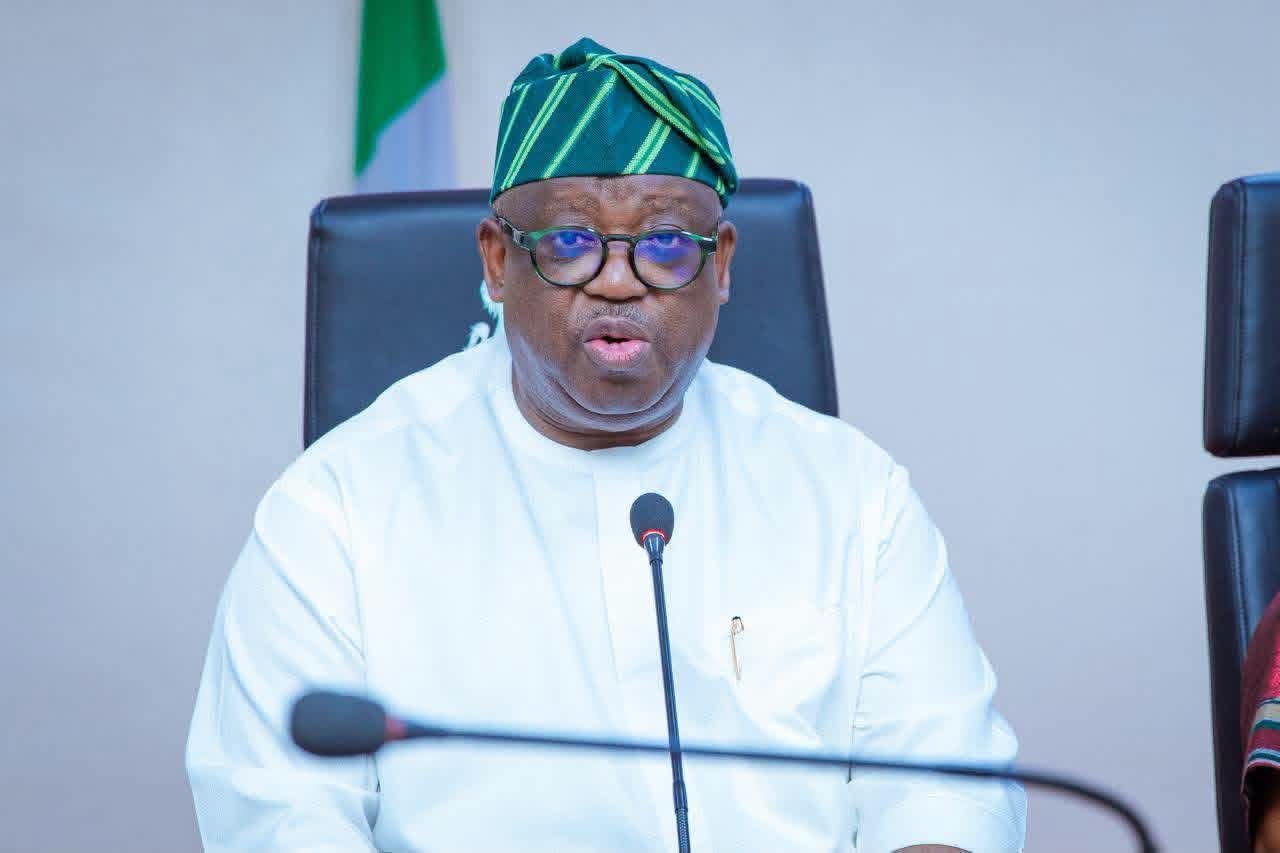
The controversy surrounding Plateau State’s reported ₦10.11 billion expenditure on travel and transport in the first six months of 2026 has taken a new turn, with Professor Elias Nankap Lamle calling for a more rigorous and evidence-based interpretation of the figure.
Lamle, of the Centre for Conflict Management and Peace Studies, said the debate should move beyond political accusations and focus on how public expenditure is appropriated, classified, recorded and reported.
His intervention followed an article by Shabul Mazadu titled “N10.11bn TP/TRAVEL ACCOUNTABILITY & MATTERS ARISING,” which questioned the expenditure and its relationship with the budget of the Plateau State Government House and Governor’s Office.
While acknowledging the importance of citizens questioning government spending, Lamle argued that the reported ₦10.11 billion should not automatically be interpreted as the personal travel expenditure of Governor Caleb Mutfwang or as spending exclusively attributable to Government House.
According to him, the central issue is the distinction between institutional budget allocations and the classification of actual expenditure in government financial reporting.
“A financial report identifying expenditure under a category such as ‘Travel and Transport’ does not automatically mean that the money was personally spent by the Governor,” Lamle argued.
He explained that government budgets serve as instruments for planning, authorisation, control and reporting of public expenditure, while financial reports may aggregate spending according to economic or functional classifications..
The distinction, he maintained, is important because travel-related expenditure can arise from activities involving numerous arms and institutions of government.
Such expenditure, he said, could include official assignments, conferences, training and retraining, educational programmes, legislative activities, judicial engagements, pilgrim activities, medical interventions and other authorised government programmes.
Lamle therefore cautioned against converting a broad expenditure classification into a political claim that the Governor personally spent ₦10.11 billion on travelling.
The scholar also defended the clarification reportedly provided by Plateau State Commissioner for Information and Communication, Hon. Joyce Lohya Ramnap, who explained that the figure represented aggregate expenditure relating to travel, transportation and associated official activities across the wider state public service.
Lamle said the explanation was not inherently inconsistent with the existence of separate budgets for ministries, departments and agencies, the House of Assembly, tertiary institutions and other public bodies.
He stressed that separate appropriations and consolidated financial reporting could coexist.
According to him, appropriation determines what government is authorised to spend, while financial reporting records and classifies expenditure actually incurred.
“A government can have numerous Ministries, Departments and Agencies with separate appropriations and still consolidate their expenditures for purposes of budget implementation, fiscal reporting or financial analysis,” he said.
The argument also extends to government-sponsored scholarships, particularly the overseas scholarship programmes cited in the controversy.
Lamle noted that scholarships may fall under an education-related budget, but expenditure associated with transporting beneficiaries or facilitating approved official programmes could potentially be captured under a broader travel and transport classification when expenditure is consolidated.
He said the same principle could apply to civil servants attending training programmes, lecturers travelling for official assignments, judicial personnel undertaking authorised engagements or legislators participating in approved activities.
However, Lamle emphasised that explaining the accounting possibility does not mean the ₦10.11 billion should escape scrutiny.
He described the amount as substantial public expenditure and said Plateau citizens have every right to demand answers about how it was spent.
He called for a detailed breakdown showing the institutions that incurred the expenditure, the approved provisions, actual spending, beneficiaries and purposes for which the funds were used.
He also urged relevant accountability institutions to examine the expenditure where necessary.
According to him, the appropriate documents for establishing the facts would include the relevant appropriation law, budget implementation reports, expenditure classifications, warrants and releases, financial statements of the affected government institutions and reports of the Auditor-General where applicable.
Lamle said such evidence would be necessary before concluding that funds were improperly charged, misclassified, diverted or personally expended by a public official.
He maintained that criticism of Governor Mutfwang’s administration remains legitimate, but argued that political criticism should not be built on assumptions about government accounting.
He particularly rejected what he described as the tendency to personalise every government expenditure around the Governor.
A state government, he noted, comprises numerous institutions, ministries, departments, agencies and statutory bodies, and the Governor does not personally undertake every transaction carried out within that system.
For Lamle, the controversy should therefore be reframed.
Rather than asking how Governor Mutfwang spent ₦10.11 billion on travelling, he said the more appropriate question is what constituted the reported expenditure, which government entities incurred it, under what approved provisions it was incurred, how it was classified and what value it delivered.
He said any evidence of waste, abuse, misclassification or financial impropriety should attract accountability, while legitimate expenditure should equally be presented to the public within its proper context.
Lamle stressed that accountability should not be about establishing government guilt in advance but about determining the facts.
He consequently disagreed with Mazadu’s interpretation while acknowledging the legitimacy of the writer’s demand for public accountability.
According to him, the controversy demonstrates the need for journalists, scholars, political actors and civil society organisations to approach public financial information with accuracy and intellectual discipline.
He said the government should provide further details on the ₦10.11 billion figure where appropriate, adding that transparency would help resolve the controversy and enable citizens to make informed judgments.
Lamle concluded that political differences should not prevent public commentators from distinguishing between verified facts, accounting classifications and political interpretations.
For him, the ultimate question is not whether a financial figure can be used as political ammunition, but whether available records establish how public funds were spent and whether the people received value for the expenditure.