
WHEN A MAN PREPARES FOR ETERNITY: THE EXTRAORDINARY STORY OF REV. OFILI KERRY AND THE MYSTERY OF KNOWING ONE'S END
By Gilbert Uchendu Ogazi
E-ISSN: 2354-4481
Death remains life's greatest certainty and humanity's greatest mystery. It is the one appointment every human being must keep, yet no one knows precisely when it will come. Across civilizations, religions, and generations, people have searched for answers about what lies beyond life and whether anyone can truly know the hour of their departure from this world.
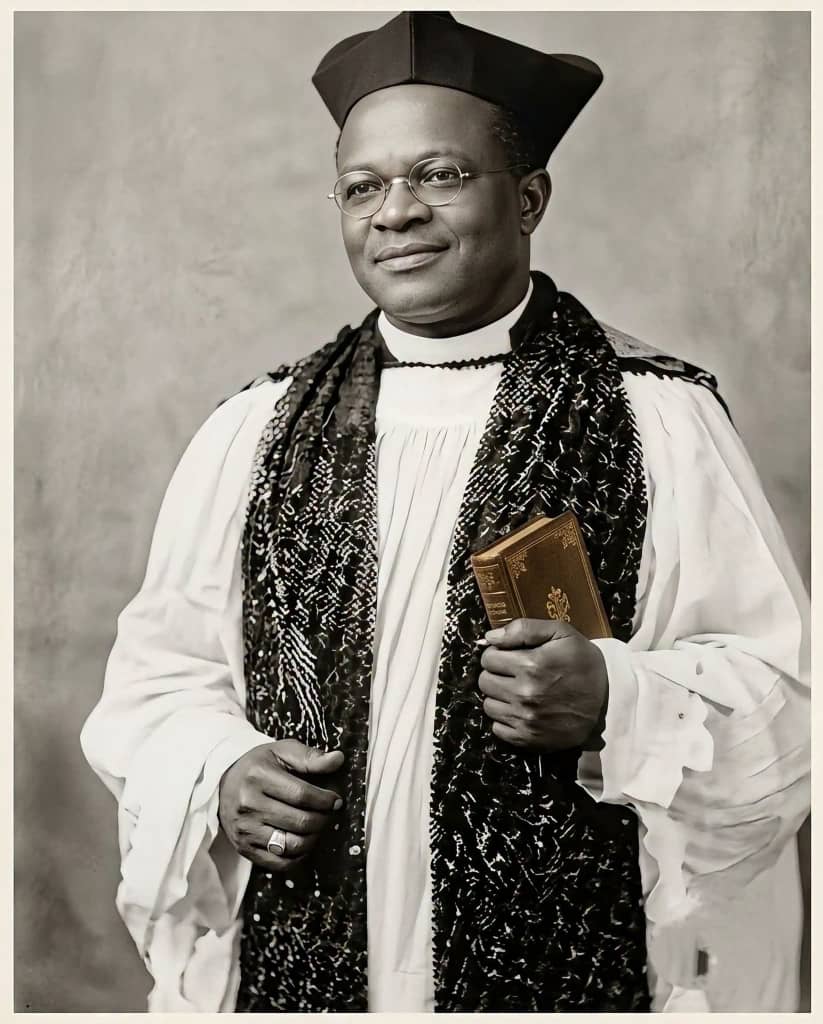
It is against this backdrop that the remarkable story of Reverend Josiah Ofili Kerry, a native of Akwukwu-Igbo in Osimili Aniocha, Local Government Area, Delta State; continues to fascinate believers, historians, skeptics, and students of religion decades after his passing. His life was extraordinary, but it was the manner of his death—and his apparent foreknowledge of it—that transformed him into one of Nigeria's most intriguing religious figures.
According to accounts preserved by those who knew him, Rev. Kerry stood before his congregation on Sunday, September 30, 1990, and calmly announced that he would die the following day. Such a declaration would ordinarily be dismissed as symbolic or figurative. Yet, in the early hours of October 1, 1990, exactly as he had reportedly predicted, he passed away peacefully at the age of 84.
Whether viewed through the lens of faith or skepticism, the incident remains one of the most unusual stories in Nigeria's religious history.
Even more remarkable was what followed.
Rather than leaving his family to struggle with funeral arrangements, Rev. Kerry reportedly returned home after that final church service and typed a detailed ten-page funeral programme. It was not a rough outline or a casual note. It carefully specified the hymns to be sung, the order of service, the conduct expected of mourners, and the atmosphere he wished to define his farewell.
This was not merely administrative planning. It reflected a man who believed that even in death, order, dignity, and faith should prevail over confusion and despair.
Perhaps the most striking element of his instructions was his insistence that mourners should not wear black. Instead, everyone was asked to appear in white—a colour universally associated with purity, victory, resurrection, and eternal hope within Christianity.
That decision alone communicated a profound theological statement.
Rev. Kerry seemed determined that his funeral should not become an exhibition of hopeless mourning but rather a celebration of fulfilled faith.
Equally significant was his rejection of gun salutes and certain traditional mourning practices. He reportedly instructed that no gunshots should accompany his burial, that his children should not shave their heads according to local custom, and that no traditional rites should be performed until Christian burial had been completed.
Whether one agrees with those directives or not, they reflected consistency between his preaching and his personal convictions.
A leader's greatest testimony is often whether his private beliefs match his public teachings. In this respect, Rev. Kerry appeared determined to remain faithful to his principles until the very end.
Another fascinating aspect of the story concerns his reported desire to personally supervise preparations for his burial site. According to those close to him, he obtained permission for his burial location from the Anglican Diocese and reportedly wished to dig his own grave and purchase his own coffin before his death. Church elders eventually persuaded him not to proceed with those plans.
To many readers, this may sound unsettling. Yet viewed differently, it demonstrates an uncommon willingness to confront mortality without fear.
Modern society often treats death as an uncomfortable subject to be avoided. Conversations about wills, funerals, or burial arrangements are frequently postponed because they are considered ominous. Ironically, avoiding discussions about death has never prevented death itself.
Rev. Kerry's actions challenge that cultural discomfort. They invite reflection on whether preparing for death is an expression of fear—or perhaps an expression of wisdom.
His life had already been marked by extraordinary experiences long before 1990. Reports indicate that he survived two assassination attempts between 1958 and 1962. Such experiences undoubtedly shaped his understanding of life's fragility and the sovereignty of God.
His reported calling into Christian ministry at the age of eight further contributed to the image of a man whose entire existence revolved around spiritual purpose.
For believers, his prediction naturally raises questions about divine revelation. The Bible contains numerous examples of individuals who were given insight into future events. The Apostle Paul anticipated his departure. Jacob blessed his children before his death. Moses prepared Israel knowing he would not enter the Promised Land.
Many Christians therefore see nothing impossible in the idea that God could reveal the timing of someone's death.
Others, however, approach the story with caution.
Skeptics argue that extraordinary claims require extraordinary evidence. Oral history, memories shaped by time, and deeply held religious beliefs may influence how such events are remembered and narrated decades later.
This caution deserves respect.
Faith should never fear honest questions.
Likewise, skepticism should never dismiss sincere testimonies simply because they challenge conventional assumptions.
The enduring value of Rev. Kerry's story may therefore lie not in proving supernatural phenomena but in provoking meaningful conversations about mortality, faith, preparation, and legacy.
Another remarkable detail was his reported request that news of his death be published in national newspapers. This suggests that he understood the broader significance of his life's witness beyond his immediate community.
Perhaps even more astonishing was the document in which he reportedly anticipated that no fewer than 2,000 people would attend his funeral. According to family accounts, that expectation became reality.
If accurate, it speaks volumes about the influence he exercised during his lifetime.
True greatness is rarely measured by wealth or political office. It is often measured by the number of lives touched through service, integrity, and compassion.
The continued stream of visitors to his residence weeks after his burial further illustrates how powerful human stories can become when they inspire curiosity and reflection.
History remembers many people because they conquered nations.
Others are remembered because they transformed hearts.
Rev. Kerry appears to belong to the latter category.
His story also raises an uncomfortable question for contemporary religious leadership.
If every pastor knew tomorrow would be his final day, how many could confidently stand before their congregations without regret? How many would leave behind unity rather than controversy, simplicity rather than scandal, and service rather than self-promotion?
These questions are not aimed at condemnation but at introspection.
Death has a unique ability to expose what truly matters.
Titles fade.
Possessions remain behind.
Only character, faith, and the impact made upon others continue to speak after one's departure.
Rev. Kerry's life reminds us that preparing for death may actually be another way of preparing for eternal life.
Whether every detail of his story can be independently verified or not, its central message retains enduring relevance.
Live honestly.
Prepare wisely.
Serve faithfully.
Leave peacefully.
Ultimately, the mystery surrounding Rev. Ofili Kerry may never be fully explained. Some will continue to describe it as divine revelation. Others will interpret it as remarkable coincidence or careful planning born of old age and spiritual sensitivity.
Yet perhaps the greatest miracle was not simply that he reportedly knew when he would die.
Perhaps the greater miracle was that he lived in such a way that he was ready when that moment came.
And in a world where countless people spend their lives avoiding the certainty of death, that may be the lesson most worth remembering.
Your Opinion Matters
Did this news report meet your expectations?
How can we improve our coverage and better serve you?
Leave your comments and suggestions below.